The Warm Springs Narrative
The Confederated Tribes of Warm Springs are a sovereign Tribal Nation in central Oregon, comprising the Warm Springs, Wasco, and Northern Paiute peoples. They came together under the Treaty of 1855 and continue to preserve their unique history and traditions while governing their community today.
As a born-and-raised Oregonian, I have deep respect, admiration, and pride for the indigenous cultures that shaped my childhood and Central Oregon. I walked the Oregon Trail with my classmates, carved animals out of soap at the High Desert Museum, and drove hours through the red valleys to the Kah-Nee-Ta springs to swim in naturally heated mineral water. My namesake is the McKenzie River, which has been home to Native American tribes for over eight thousand years.
In the Classroom

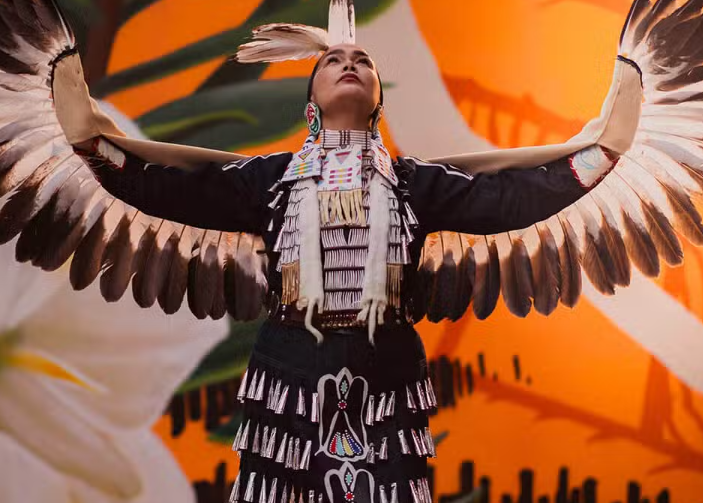
The purpose of this Journey Box is to introduce students to the rich history and living culture of the Confederated Tribes of Warm Springs while challenging the common misconception that Indigenous peoples exist only in the past. Through a variety of artifacts, students will discover that the Warm Springs, Wasco, and Northern Paiute peoples have proudly maintained their cultural identities despite significant historical opposition. Students will also explore and relate personally to how the Confederated Tribes continue to persevere as a sovereign Tribal Nation, maintaining their own government, schools, museum, businesses, and natural resource initiatives aimed at conserving their traditions for future generations. The document-based questions frequently invite students to consider the perspectives of Indigenous peoples and to make meaningful connections to their own lives.
This investigation into the Confederated Tribes of Warm Springs integrates history, geography, civics, economics, and culture through an inquiry into the lived experiences of indigenous people. When considering the New York State Social Studies Framework, this topic best aligns with 5.1 (The Diverse Geography of the Western Hemisphere) and 5.4 (The First Peoples of the Western Hemisphere). It also serves as a helpful foundation for teaching about the Oregon Trail and westward expansion in middle school.
In my classroom, I am eager to incorporate some of my childhood experiences with the culture into the learning process. I would use an inquiry-based approach, where students explore artifacts at different stations in small groups and take part in themed activities that celebrate the Warm Springs tribe's culture. They could choose an enduring question to investigate throughout the lesson and complete a formative writing assignment in which they use evidence from the artifacts to support their answer. Students would then create a brochure, a Canva, a PowerPoint, or an illustration to share their findings with the rest of the class.