
Warm Springs first tribal council in 1928. From left to right: George Meachum, Isaac McKinley, Charley McKinley, Nathan Heath and Jackson Culps. (Photo from The Museum at Warm Springs)

_jfif.jpg)

Indigenous people continue to use traditional fishing platforms, nets and traps to catch the highly regarded native salmon. (Photo by Steve Heinrichs / Travel Central Oregon)

The Warm Springs reservation is dark blue and the land they ceded to the United States is light blue. The Columbia Basin is dark tan.

Culture Camp in Warm Springs (Photo from warmsprings-nsn.gov)
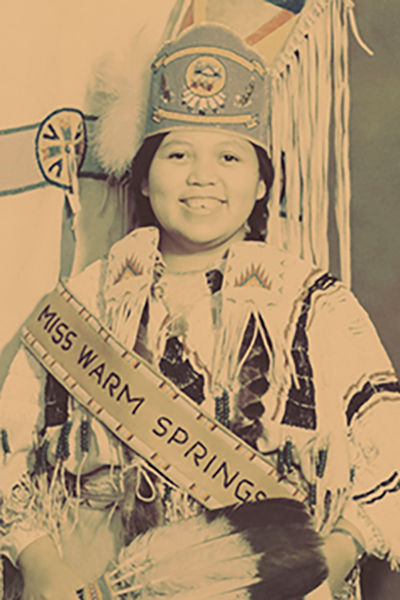
Miss Warm Springs serves as a cultural ambassador and role model for the Confederated Tribes of Warm Springs. (Photos from warmsprings-nsn.gov)
Document-Based Questions:
1. What are three things you notice from the photographs that you relate to?
2. What can photographs and maps tell us that words alone cannot? Use an example from the visual artifacts.
3. What is something you think the indigenous people of Warm Springs value? Support your reasoning with one piece of evidence from the artifacts.